
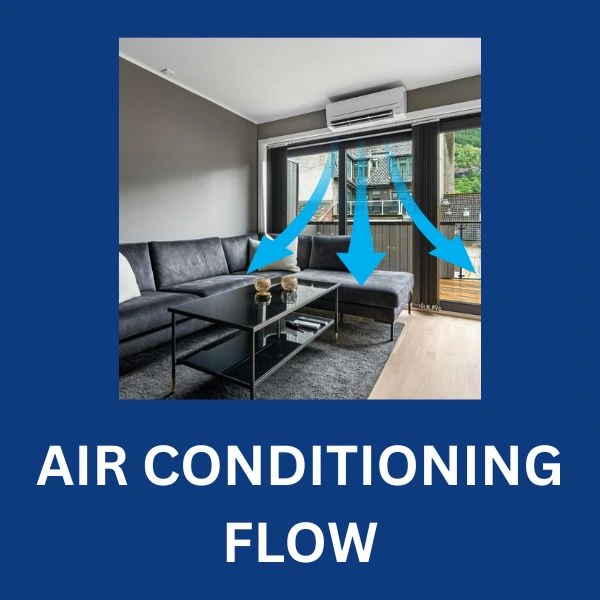
Air Conditioning flow is the movement of air through your system — from return vents, across cooling or heating coils, and back out through supply vents. In the UK, it’s measured as volume flow rate in litres per second (l/s) or cubic metres per hour (m³/h), using tools like anemometers and airflow meters.
Good airflow ensures comfort, energy efficiency, system longevity, cleaner air, and humidity control. Homeowners can optimise it by keeping vents clear, adjusting dampers, replacing filters, sealing ducts, and using smart controls.
For persistent issues such as weak airflow or uneven cooling, professional servicing helps balance the system, protect equipment, and reduce running costs.
Cooler Rooms, Lower Bills: It All Starts With Airflow
Ever had the Air Conditioning running full blast, yet your home still feels stuffy? Or maybe the office is freezing in one corner while the other side is hot and humid.
The culprit is usually the same. Airflow.
Air Conditioning flow is the hidden force which decides whether your system delivers true cooling…
Or noise and high energy bills.
Get it right, and your rooms stay cool, fresh, and evenly balanced.
Get it wrong, and you could waste money, shorten the life of your unit, and breathe dustier air.
The good news? Fixing airflow isn’t rocket science. In fact, many improvements are simple, affordable, and can be done today.
What Is Air Conditioning Flow?
At its core, Air Conditioning Flow is how air moves through your system.
Warm indoor air gets pulled in through return vents. It passes over coils which cool (or heat) it. Then, fans push the conditioned air back out through supply vents into your rooms.
This constant loop, return, condition, supply, is what keeps your space cool and comfortable.
In the UK, airflow is usually measured as a volume flow rate. Using units such as litres per second (l/s) or cubic metres per hour (m³/h) for larger systems.
Engineers use specialist tools like anemometers, airflow meters, or pressure sensors. To check how much air is actually moving through the ductwork or vents.
Several factors control how well air flows:
- Fans and blowers
- Filters (clean or clogged)
- Ductwork and its condition
- Vents, grilles, and dampers
In a perfectly balanced system, air flows evenly through every room.
Sounds simple. Yet the truth is, even the best-designed unit will struggle if airflow isn’t adjusted or maintained.
Why Air Conditioning Flow Matters
Here are 5 reasons why Air Conditioning Flow matters:
Comfort You Can Feel
Airflow is the process that spreads cooled or heated air evenly throughout a building. Without it, you end up with hot spots, cold corners, and uncomfortable rooms.
A balanced system means a climate you notice the moment you walk in.
Efficiency Cuts Energy Bills
When airflow is restricted, your system works harder to push air where it needs to go. Extra strain means higher running costs — and higher bills at the end of the month.
Even a single blocked vent can increase energy use by 20% or more.
Longer System Life
Poor flow doesn’t just waste money. It shortens the life of your unit. Low airflow can cause coils to freeze, compressors to overheat, and parts to fail years earlier than they should.
Regular airflow checks can save you thousands in avoidable repairs.
Cleaner, Healthier Air
Air doesn’t just carry heat — it carries dust, allergens, and pollen.
Good airflow keeps filters working at full strength, so you’re breathing cleaner, healthier air in your home or workplace.
Better Humidity Control
Airflow also helps regulate indoor moisture. Without it, humidity climbs, mould grows, and comfort drops.
And here’s the real danger: many of these problems build up over time, so you don’t notice them until the damage is done.
How to Adjust Air Conditioning Flow Yourself
You can adjust Air Conditioning Flow yourself:
Keep Vents & Grilles Clear
The simplest step is often the most overlooked. Walk around your home or workplace and check every vent.
Do rugs, curtains, or furniture cover them? Even a slightly blocked grille can strangle airflow..
Open vents in the zones you use most. In spare rooms, you can close them a little — but never all the way. Shut vents create pressure, which can damage your system.
Adjust Dampers in the Ductwork
Many UK systems have manual dampers built into the ducting. They’re small levers you’ll usually find in the loft, ceiling void, or plant room.
By adjusting them a notch, you can direct more air. Upstairs in summer and more downstairs in winter.
Getting the balance right takes some trial and error… but it makes a big difference once you find the sweet spot.
Replace or Clean Filters Frequently
Filters are the lungs of your system. When they clog, airflow suffocates. Replace disposable filters every 3-6 months.
Wash and dry reusable ones as often as the manufacturer recommends. Neglecting this one step is the silent killer of airflow.
Seal and Insulate Ducts
Leaks in ductwork spill cooled or heated air into lofts, basements, or wall cavities — rather than into your rooms.
Small gaps can be patched with foil tape or mastic sealant. Larger leaks need professional repair.
Use Zoning & Smart Controls
Smart thermostats and modern zoning systems automatically adjust airflow. Across different rooms and floors. The benefit? Better cooling and lower running costs without constant manual tweaking.
Know When It’s Time to Call a Pro
When you’re battling weak airflow, noisy ducts, or stubborn hot and cold spots, it’s no longer a DIY issue. An engineer can balance the system.
Measuring airflow at each vent, adjusting dampers with precision, and fine-tuning fan speeds.
Skipping this step is like driving a car without ever servicing it. It runs for a while. But sooner or later, the strain shows.
The Role of Modern Air Con Systems
Technology has changed the way Air Conditioning systems handle airflow.
Modern units use inverter technology, which continuously adjusts compressor speed to match demand.
Instead of blasting on and off, the system runs efficiently. Saving energy while keeping the cooling steady.
Variable-speed fans do the same for airflow. They ramp up when a room needs more cooling or heating and slow down when it doesn’t. Keeping temperatures even without wasting power.
But here’s the truth…
Even the smartest technology can’t perform if the basics (filters, ducts, and flow balance) are off.
And that’s where professional servicing steps in.
Professional Help For Perfect Airflow
DIY steps make a difference. Smart technology helps too. But nothing matches the precision of a professional airflow check. Undertaken by a qualified Air Conditioning engineer.
During a service, engineers do more than swap filters. They measure the airflow at every vent. They clean coils and seal leaks. They adjust fan speeds and balance dampers with specialised tools.
The goal is simple: smooth, even airflow in every room — without wasted energy.
Professional servicing protects your investment. By reducing strain on the system, you extend its lifespan and avoid costly breakdowns. You’ll lower energy consumption and save money on energy bills.
That’s why we offer flexible servicing plans, one-off system checks, and free quotes to the residents of Essex.
Whether it’s your home or your business, our engineers make sure your Air Conditioning runs at peak performance with fully optimised air flow.
Fix Your Air Conditioning Flow
If you live in the Essex area and would like your air Conditioning system serviced and your Airflow fixed, please contact us using the phone number or email below.

Hi, I’m Terry, the founder and owner of TM Hughes & Son Gas Services
Please get in touch to book an appointment or receive a free, no-obligation quote
Call – 01245 830075
Email – info@tmhughesandson.uk
Get A Free Boiler Quote
0% Finance
For Boiler Installations