
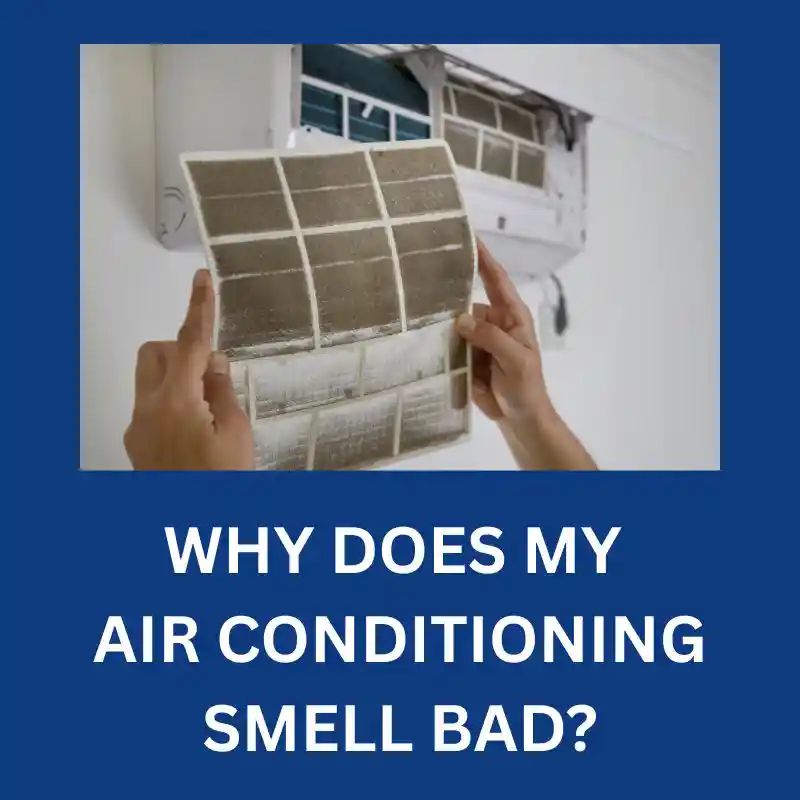
Why does your Air conditioning smell bad? A bad smell from your Air Con comes from mould, mildew, stagnant water, or dirty filters.
Smells indicate more serious problems, such as electrical faults or refrigerant leaks. Each odour tells its own story. Spotting the cause early helps keep your air clean, safe, and comfortable.
When Cool Air Turns Sour
You turn on the air conditioning, expecting cool, refreshing air. Instead, you’re met with an unpleasant smell drifting through the room.
Unwanted odours from an AC system are one of the most common complaints from homeowners and businesses. They are common after periods of heavy use or long stretches without servicing.
The good news? Every smell has a cause, and most are fixable.
Let’s look at the most common smells an Air Conditioning system produces. What they mean, and the practical steps you can take to stop them.
By the end, you’ll know which problems you can tackle yourself and when it’s time to call an engineer.
Musty or Sour Smells – Moisture and Mould
One of the most common complaints is a musty, damp, or sour smell when the Air Conditioning is running. This is a sign excess moisture has collected inside the system.
When water lingers in the drip tray or around the evaporator coils, it creates the perfect breeding ground for mould, mildew, and bacteria.
As the system runs, spores and odours circulate through the ducts and into your living space. It’s unpleasant. It can aggravate allergies, trigger asthma symptoms, and affect air quality.
Notice this smell? Check the condensate drain is clear and make sure the unit is draining. Cleaning or replacing filters also helps reduce moisture build-up.
If mould has taken hold on the coils or within the ductwork, a professional service is the most effective solution.
A musty odour is the air conditioning’s way of warning you the conditions inside are too damp. Left alone, it gets worse. With servicing, you’ll restore fresh, clean air to your home.
Dusty or Stale Smells – Dirty Air Filters
If your Air Conditioning smells like a dusty loft or an old cupboard, the culprit is often the air filter.
Filters trap dust, dirt, and airborne particles before they reach the system’s coils.
When they’re left unchanged for too long, those same particles build up. A breeding ground for bacteria and odour-forming microbes..
Instead of cleaning the air, the system starts blowing stale, dusty air back into the room.
A dirty filter smells bad and restricts airflow, forcing the system to work harder, raising energy bills and wearing out parts faster.
The fix is straightforward. Check your filters every 1–3 months. Replace or clean filters according to the manufacturer’s guidance.
Damp, Stagnant Smells – Clogged Condensate Drain
Another common source of unpleasant odours is a blocked condensate drain line. This small pipe carries away the water which collects as your system cools the air.
If the drain becomes clogged with dirt, algae, or debris, water starts to back up inside the unit.
Stagnant water develops an unpleasant, damp smell, which is carried into your home every time the Air Conditioning runs. In some cases, the backed-up water can even overflow. Causing leaks, stains, and water damage around the unit.
You’ll prevent problems by making sure the drain line is kept clear. If you’ve noticed a stagnant odour—or worse, signs of leaking—it’s best to have the system serviced.
An engineer will clear the blockage. Disinfect the line, and ensure moisture is draining as it should.
Strong Rotten Smells – Decaying Organic Matter
Few things are as unpleasant as switching on the Air Conditioning and being hit with a smell which reminds you of rotten eggs or decay. This indicates organic matter has entered the system.
Rodents, birds, or insects sometimes make their way into ductwork or units during colder months when they’re looking for shelter. If they become trapped and die inside, the smell of decay is circulated through your system.
Fallen leaves stuck in the outdoor unit break down and release a sour, earthy odour.
Beyond the smell itself, decomposing matter harbours bacteria and other pathogens. This poses hygiene and even health risks.
This is not a do-it-yourself fix. The best approach is to have the system inspected and cleaned by an engineer. They’ll identify and remove the source of the smell and disinfect the affected areas.
Sour, Metallic, or Burning Smells – Electrical Issues
If your Air Conditioning gives off a sharp, metallic, or burning smell, it’s a sign you must never ignore. Unlike musty or dusty odours, this one points to an electrical fault.
When wires overheat, insulation melts, and plastic components fail. The system gives off a smell that’s burnt, fishy, or metallic. A warning that parts inside are overheating or breaking down.
Electrical faults can lead to system failure, expensive repairs, and, in the worst cases, fire. If you smell burning, take it as a serious warning. Turn the unit off at once and contact a qualified Air Conditioning engineer.
Chemical or Sulphur Smells – Refrigerant Leaks
In older systems which still use Freon, a chemical or sulphur-like smell (like rotten eggs) signals a refrigerant leak.
Refrigerants are essential to cooling. When they escape, they release odours which are both unpleasant and harmful.
Inhaling refrigerant fumes causes headaches, dizziness, or nausea. Long-term exposure poses more serious health risks.
Leaks harm the environment and can damage the efficiency of your system. Leaving it struggling to cool.
This is not a repair to tackle yourself. Refrigerant leaks require special tools and the skill of a certified, experienced engineer.
An engineer will not only locate and fix the leak but also recharge the system so it runs at full capacity again.
If you suspect a refrigerant leak, turn off the unit and arrange a repair. It’s the only safe way to protect both your health and your Air Conditioning system.
How to Prevent Bad AC Smells
Bad smells signal your Air Conditioning needs attention. The good news is many of these problems can be avoided with preventative care.
Start with the basics: keep your air filters clean. Replacing or washing them regularly prevents dust and organic particles from building up. Keeping bacteria and odour-causing microbes at bay. It also ensures the system runs efficiently, saving energy in the process.
Next, don’t forget about the condensate drain line. Periodic checks to ensure water is flowing freely will prevent stagnant conditions, which lead to musty smells.
Likewise, keeping coils and internal parts clean helps stop mould and dirt from collecting where you can’t see it.
The most effective step of all is to have servicing done at least once a year.
Fresh Air Starts With Proper Care
A service includes cleaning and inspection. Clearing dirt and disinfecting parts ensures everything drains and runs as it should. Servicing ensures the best possible energy efficiency as well.
If you live in Essex, we can help you. Our team offers expert servicing, repairs, and installation. Carried out by certified, experienced and insured engineers.
Please contact us using the phone number or email below to book an engineer or learn more about our services.

Hi, I’m Terry, the founder and owner of TM Hughes & Son Gas Services
Please get in touch to book an appointment or receive a free, no-obligation quote
Call – 01245 830075
Email – info@tmhughesandson.uk
0% Finance
For Boiler Installations